
Individual Development Plans: Crafting Growth Roadmaps for ABA Staff

For BCBAs, supervisors, and clinic leaders who manage RBTs and ABA teams, this practical guide shows how to build Individual Development Plans that create clear, measurable career pathways and address staff turnover and stalled professional growth. It includes step-by-step instructions, SMART-goal examples, competency matrices, and editable templates to collect and interpret staff performance data without adding unnecessary paperwork. Emphasizing BCBA oversight, privacy safeguards, and simple measurement strategies, the guide helps turn ABA data into transparent, ethical supervision and promotion decisions.
Effects of correct versus incorrect response feedback on work performance
For BCBAs, supervisors, and clinicians working with severe problem behavior, this post summarizes research on therapist-worn protective equipment and why staff do or don’t use it. It helps teams struggling with inconsistent or impractical PE use by outlining a brief decision tool and practical steps to match protection to observed contact sites while preserving mobility and dignity. Emphasizing data-driven, ethical choices, it shows how simple ABA data (contact locations and rates) can guide least-restrictive, workable PE prescriptions and ongoing monitoring.
I.5. Identify and apply empirically validated and culturally responsive performance management procedures.

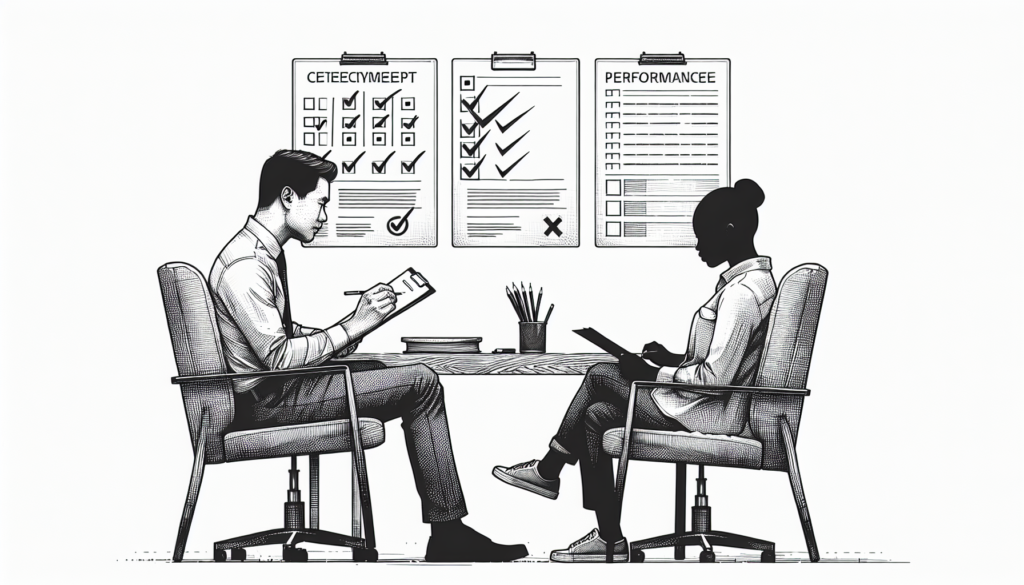
Designed for ABA supervisors, clinical leaders, and practice managers who supervise RBTs, this post tackles performance drift and training plateaus. It presents empirically validated, culturally responsive performance management procedures that turn data into ethical, actionable coaching decisions. Learn practical steps—objective targets, baselines, timely feedback, reinforcement, and cultural adaptation—to improve protocol fidelity and client outcomes.