
Preliminary analysis of rule explicitness on instructional control in immediate and delayed contingencies

For behavior analysts, clinicians, and supervisors who need clients to choose larger delayed outcomes over tempting immediate rewards, this post summarizes lab evidence on how rule explicitness affects instruction following. It offers practical, clinician-friendly guidance on writing concrete if‑then rules, pairing rules with meaningful near‑term reinforcers, and monitoring response patterns. Emphasis is on using ABA data to make clear, ethical clinical decisions about when rule clarity is enough and when environmental or reinforcement changes are needed.
B.6. Identify and distinguish between automatic and socially mediated contingencies.
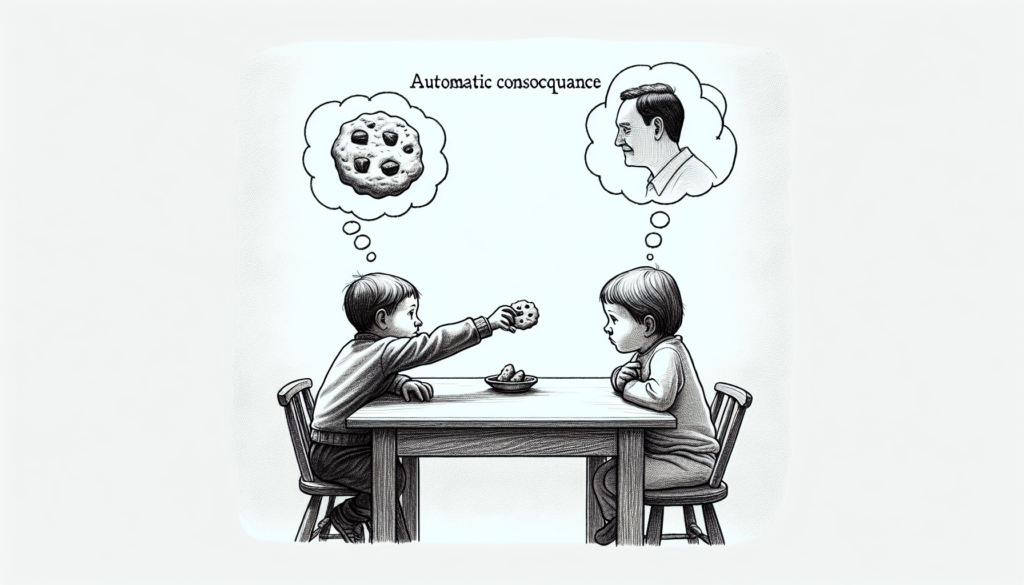
This post is for practicing BCBAs, clinic owners, supervisors, and clinicians who need to distinguish automatic from socially mediated contingencies. It offers practical observation methods, ABC data interpretation, and functional-analysis considerations to identify function and guide appropriate, least-intrusive interventions. The focus is on turning ABA data into clear, ethical decisions that tailor treatment to the true reinforcement maintaining the behavior.
Positive vs Negative Punishment: ABA Examples & Differences

Positive vs negative punishment in ABA — clear examples, a 4-quadrant chart, and how to avoid common BCBA exam traps. Free CEUs included.
B.4. Identify and distinguish between positive and negative reinforcement contingencies.
Designed for practicing BCBAs, clinic leaders, supervisors, and others who design or monitor ABA interventions, this post clarifies how to identify and distinguish positive and negative reinforcement contingencies. It shows you how to use ABC data and functional assessment to determine what changed after a behavior—what is added or removed—and whether that change increases the behavior. The guidance emphasizes function over labels and ethical, least-restrictive decision-making to turn data into clear, effective intervention plans that protect learner dignity and outcomes.