
When less is more: Exploring the relation between delay discounting rates in a personal and organizational context

For ABA clinicians, supervisors, and clinic leaders, this post explains how delay discounting influences staff choices about workplace resources and long-term initiatives. It helps turn ABA data into clear, ethical decisions about designing incentives, supervision, and systems that reduce delay and increase certainty so promised benefits function as real reinforcers. Practical steps include assessing organizational follow-through, using nearer-term contingencies, and tailoring supports without labeling staff.
Ableism in applied behavior analysis: A beginner’s guide to understanding and dismantling ableism in practice with autistic people

For behavior analysts (BCBAs, RBTs) working with autistic clients, this concise guide explains how ableism can shape goals, measurement, language, and intervention choices. It offers practical, ethics-focused checks—grounded in session data, social validity, and assent—to help distinguish harm from harmless difference and reduce unnecessary restriction. Use these steps to turn ABA data into clear, ethical clinical decisions that preserve client dignity and choice.
Training in trial-based functional analysis via computer-based instruction and behavioral skills training
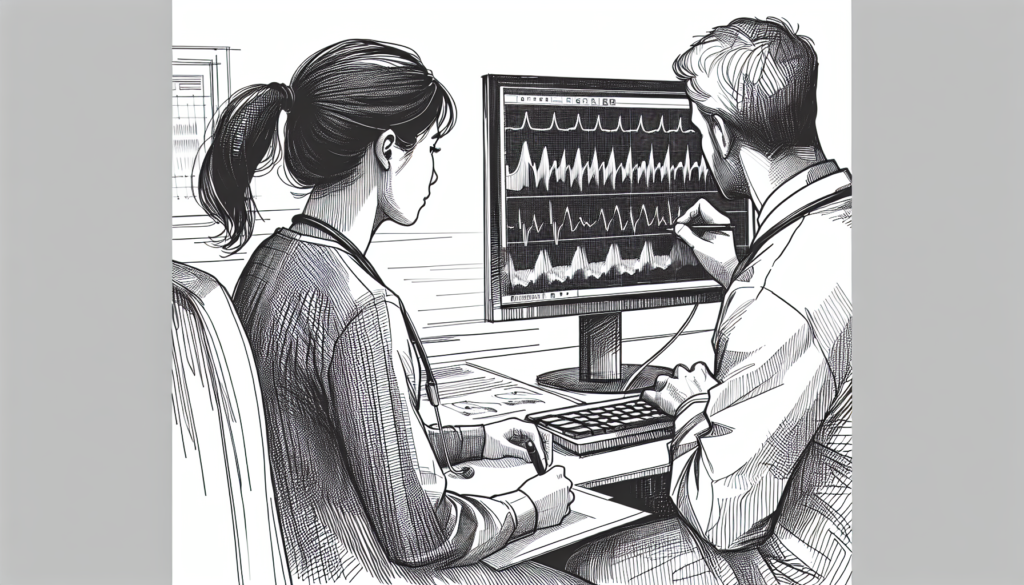
For BCBAs, supervisors, and clinicians who train staff in functional assessment, this study examines whether computer-based instruction alone produces competent trial-based functional analysis (TBFA) implementation. It shows that online knowledge gains don’t guarantee correct trial execution and recommends a practical sequence—online pre-work, scored role-play, telehealth BST with performance feedback, and scheduled boosters—to preserve procedural integrity. Using this approach helps ensure TBFA data are valid so teams can turn ABA assessment results into clear, ethical treatment decisions.
Effects of correct versus incorrect response feedback on work performance
For BCBAs, supervisors, and clinicians working with severe problem behavior, this post summarizes research on therapist-worn protective equipment and why staff do or don’t use it. It helps teams struggling with inconsistent or impractical PE use by outlining a brief decision tool and practical steps to match protection to observed contact sites while preserving mobility and dignity. Emphasizing data-driven, ethical choices, it shows how simple ABA data (contact locations and rates) can guide least-restrictive, workable PE prescriptions and ongoing monitoring.
Verbal mediation during auditory equivalence class formation using go/no-go successive matching-to-sample

For clinicians and behavior analysts, this post shows how to turn ABA auditory matching data into clear, ethical decisions about assessment and instruction. It summarizes a controlled study showing that requiring verbal report during initial go/no‑go probes can change performance and that verbal mediation often tracks with—but does not prove—emergent responding. Practical guidance covers sequencing probes, when to collect talk‑aloud data, and how to avoid adding response demands that confound measurement or dignity.
Correspondence between vocal-verbal behavior and go/no-go responses during the successive matching-to-sample procedure

For clinicians and behavior analysts working with derived relations and auditory matching tasks, this post summarizes research on whether learners’ spoken self‑talk corresponds with go/no‑go accuracy. It addresses the practical problem of determining whether correct responding reflects true stimulus relations or a verbal strategy. The piece offers dignity‑centered, clinician‑friendly guidance on observing and recording verbal behavior so you can make clear, ethical decisions about testing and teaching conditions.
A preliminary investigation into teaching adolescents with autism to use apps to solve problems

For clinicians working with adolescents with autism, this post examines teaching everyday apps (Maps, Weather, Clock) as problem‑solving tools. It translates ABA data from a two‑student study into concrete decisions about chaining, prompt fading, discrimination training, response‑format adjustments, and generalization testing. The focus is practical and ethical: teach the necessary links, loosen response requirements early, and prioritize meaningful independence over perfect form.
The effects of reinforcing tacting on the recall of children with autism

For ABA clinicians working with children with autism who can tact but struggle to report past events, this blog summarizes a study testing whether reinforcing tacts during an activity improves later recall. It gives practical steps for implementing and measuring tacting, plus ethical cautions about prompting, reinforcement, and rapport. Use the approach to collect clear, individualized data and make evidence-based decisions about whether tacting supports meaningful communication for each learner.
A preliminary evaluation of prescribing therapist-worn protective equipment
This post is for ABA clinicians, supervisors, and program leaders seeking safer, ethically sound use of therapist-worn protective equipment (PE). It shows how to turn session data, incident notes, and staff feedback into a structured method that matches PE to actual contact sites, keeping PE as a safety support—not a treatment tool. Drawing from a small pilot, it discusses a prescription-based approach, dignity and stigma considerations, and how to embed PE decisions into routine risk reviews so practice remains data-driven and adaptable as new information emerges.
Acquisition of incidental bidirectional naming: Isolating the effects of probing and mixed-operant instruction

This post is for practicing ABA clinicians, behavior analysts, and SLPs working with children with autism or language delays. It helps you interpret progress data on bidirectional naming by clarifying when repeated probes alone may teach, when mixed-operant instruction is needed, and how probe order can influence interpretation. We translate the study into practical, ethical steps for treatment planning, monitoring maintenance, and turning ABA data into clear decisions about probing, MOI, and generalization.