
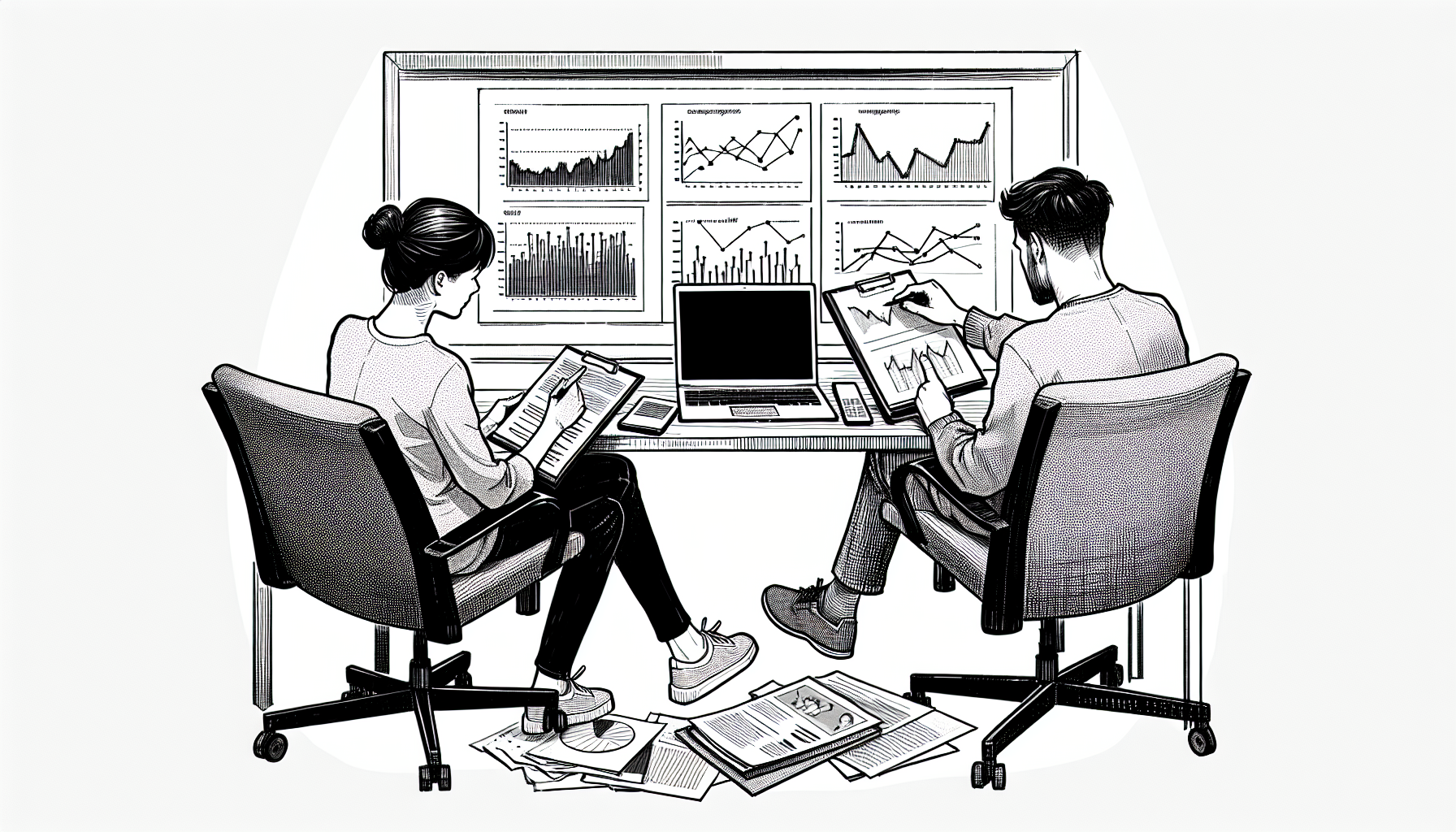

ABA Data Collection & Analysis Guide: Simple Systems for Better Clinical Decisions
You have a stack of data sheets, a tablet full of numbers, and a graph that looks like a seismograph during an earthquake. Your team collects data every session, but when it comes time to make a clinical decision, you find yourself asking: what does any of this actually tell me?
This guide is for practicing BCBAs, clinical supervisors, and experienced RBTs who want data systems that work in real life. Not data for data’s sake. Not graphs that impress but don’t inform. We’re talking about simple, dignity-first systems that help you decide what to keep, what to change, and what to stop. See also: BACB standards for data collection and measurement.
By the end, you’ll know how to choose the right measurement method for your clinical question, collect data in ways that respect the learner, and turn those numbers into clear next steps.
Start With Ethics: What Data Is Worth Collecting?
Before you pick a measurement method, pause. Not every behavior needs a data sheet. Not every skill needs a trial-by-trial graph. The first clinical question is whether collecting this data will actually change what you do.
Good data collection starts with a clear purpose—one that connects to something that matters to the learner: quality of life, safety, independence, or access to meaningful activities. If your data doesn’t trace back to one of these outcomes, ask yourself why you’re collecting it. Sometimes the honest answer is “because we always have” or “because the form has a space for it.” Those aren’t good enough reasons. See also: peer-reviewed research on measurement reliability and IOA.
Use the least intrusive measurement that still answers your clinical question. If you can get what you need from checking a completed worksheet at the end of the session, you don’t need someone standing with a clipboard counting every response. Less surveillance can mean more dignity.
Build assent into your measurement plan. Track whether the learner is showing they’re willing to participate right now. Look for indicators of engagement: approaching materials, joining tasks, saying yes, looking relaxed. Also watch for signs of withdrawal: moving away, saying no, pushing materials, or using self-advocacy statements.
When you see withdrawal, pause the demand if it’s safe to do so. Offer choices, reduce the task size, or give a break. Then track what you changed so you can learn what restores engagement over time.
Finally, protect privacy. Keep data secure, share only what’s needed, and remember that these numbers represent a person’s life. Data supports clinical judgment. It doesn’t replace it.
Quick Ethics Checklist Before You Pick a Method
Ask yourself these questions before you finalize your data plan:
- Does this target matter to the learner’s life?
- Is the plan respectful and doable for staff and families?
- Will this data lead to a clear next step?
- How will you reduce stress during measurement?
If you can’t answer these, simplify your system.
What ABA Data Collection Is and What It’s For
ABA data collection is the systematic way you observe and record behavior so you can make clear decisions. It replaces gut feelings with facts you can graph and review.
The purpose is simple: track progress, spot patterns and triggers, guide treatment changes, support ethical care, and meet documentation requirements.
Data is part of a full picture. It works alongside direct observation, caregiver input, the learner’s preferences, and the context of their life. A number on a graph only means something when you know the story around it.
Think of data as falling into two big buckets. Skill acquisition data measures learning: accuracy, independence, prompt level, latency to respond, and rate of correct responses. Behavior reduction data measures unsafe or interfering behavior: frequency, rate, duration, intensity when appropriate, and ABC patterns when you need function clues.
One common pitfall is collecting lots of data that no one reviews. If your team is buried in numbers but nothing changes as a result, your system isn’t working. Map each data point back to a decision. If you can’t, consider whether you need that data at all.
A Simple Decision Chain
Here’s the workflow that keeps data useful:
- Define the behavior or skill clearly so two people would score it the same way.
- Choose a measurement method that fits.
- Collect data the same way each time.
- Review and graph it on a set schedule.
- Make a decision and document why.
This chain keeps data connected to action.
Core Measurement Methods: What They Mean and When to Use Them
Understanding your measurement options helps you pick the right tool for the job.
Frequency or count means how many times the behavior happens. If a learner hits three times during a session, that’s a frequency of three. This works well for discrete behaviors with a clear start and stop.
Rate is frequency divided by time. It helps when session lengths change. Two hits in a one-hour session equals a rate of two per hour. This lets you compare across days when sessions run long or short.
Duration measures how long the behavior lasts from start to finish. If a tantrum lasts ten minutes, you record ten minutes. Use duration when the length of the behavior matters more than how often it happens.
Latency measures the wait time between a prompt or event and the start of the behavior. If you give an instruction and the learner sits down five seconds later, the latency is five seconds. This is helpful for measuring response speed to directions.
Interval recording divides time into equal chunks and asks whether the behavior happened during each chunk. Whole interval recording counts it only if the behavior happened for the entire interval. Partial interval recording counts it if the behavior happened at any time during the interval. These methods give estimates, not exact counts.
Momentary time sampling scores whether the behavior is happening at the exact moment the interval ends. When the timer beeps, you look and record yes or no. This is useful when you can’t watch continuously.
ABC data captures what happened before the behavior, what the behavior was, and what happened immediately after. It helps identify patterns and likely function. Use it short-term when you need context clues, then switch to a simpler measure once the target is clear.
Plain-Language Examples
- Frequency: hits happened three times.
- Duration: crying lasted six minutes.
- Latency: started the task twenty seconds after the direction.
- Interval: out of seat happened in six of ten intervals.
- ABC: when asked to clean up, the learner dropped to the floor, and the adult removed the demand.
How to Pick the Right Measurement System Step by Step
Matching the method to your clinical question is the key to useful data.
Start by writing the clinical question. What decision are you making? Examples might include whether aggression is decreasing enough to fade proximity support, or whether independent requesting is increasing across different staff members.
Define the target so that two people would score it the same way. This is your operational definition. It should describe what counts and what doesn’t.
Pick a method that fits the behavior:
- If the behavior is discrete with a clear start and stop, frequency or rate often works well.
- If session length varies, use rate.
- If you care about how long the behavior lasts, use duration.
- If you care about how quickly the learner starts after a prompt, use latency.
- If staff can’t watch continuously, consider momentary time sampling or interval recording.
- If you need to understand patterns and triggers, add ABC data for a limited time.
Check feasibility. Can the tech collect this data in real time without missing teaching opportunities? Can you graph it quickly? Will the system hold up when sessions are busy or staffing changes?
Pick a review schedule that matches the risk and the goals. High-risk behaviors may need daily scans. Skill acquisition targets might be fine with weekly reviews.
Decide what success and what “needs change” will look like. These are your decision rules. Write them down before you start collecting so you know when to act.
Mini Decision Guide
- If you care about how many: start with frequency or rate.
- If you care about how long: use duration.
- If you care about how fast after a prompt: use latency.
- If you can’t count every instance: consider momentary time sampling, with clear acknowledgment of its limits.
- If you need function clues: add ABC data short-term.
ABC Data: How to Take It and Common Mistakes to Avoid
ABC stands for antecedent, behavior, and consequence. The antecedent is what happened right before. The behavior is what the learner did. The consequence is what happened immediately after.
Use ABC data when you’re trying to understand a new or changing behavior, when triggers are unclear, or when training new staff to notice context. It’s a discovery tool, not a forever measure.
When taking ABC notes, write observable events. Keep it short and consistent. Add setting events if they matter, like sleep, illness, or schedule changes.
Here’s an example:
- Antecedent: the RBT said “clean up the blocks” and removed the iPad.
- Behavior: the client screamed “no” and threw two blocks.
- Consequence: the RBT picked up the blocks and said “okay, we’ll take a break.”
Common Mistakes and How to Fix Them
Writing opinions instead of observations. Subjective phrases like “he was aggressive” or “she got angry” don’t help. Write what you saw: “he hit the peer’s arm with an open palm” or “she shouted ‘no’ when told to clean up.”
Recording after the fact from memory. ABC notes should be taken in real time or immediately after. Delayed notes have more errors.
Writing vague behavior descriptions. Phrases like “acted out” or “had a rough day” don’t tell you what happened. Write the observable action.
Missing the immediate consequence. The consequence column needs to capture what happened right after the behavior, not just how the session ended.
Collecting ABC data forever. Use it to identify patterns, then switch to a simpler measure like frequency or rate once you know what you’re tracking.
ABC Better Notes Rules
- Write what someone could see or hear.
- Keep it short and consistent.
- Add setting events if they matter.
- Use ABC to guide a testable plan, not to label a learner.
Make Data Reliable: Operational Definitions, IOA, and Treatment Integrity
Good data starts with a clear operational definition—a description of what counts and what doesn’t, written so that two people would score the same event the same way.
Here’s an example format:
- Target: physical aggression.
- Definition: any instance of hitting, kicking, biting, or scratching another person with force.
- Examples: hitting with an open hand, kicking a shin.
- Non-examples: high-five, accidental bump.
Including non-examples clarifies close calls and reduces drift over time.
Interobserver agreement (IOA) means having two people score the same event to check accuracy. Both observers need to use the same operational definition, the same measurement system, and record independently at the same time and place. They should not coach each other during the observation.
There are several ways to calculate IOA depending on what you’re measuring:
- For frequency: divide the smaller count by the larger count and multiply by one hundred.
- For duration: divide the shorter duration by the longer and multiply by one hundred.
- For interval recording: divide the number of agreed intervals by the total intervals and multiply by one hundred.
Many clinics sample IOA for around twenty to thirty percent of sessions and use eighty percent agreement as a common benchmark, retraining if scores fall below.
Treatment integrity (also called procedural fidelity) asks whether staff ran the plan the way it was designed. Without this check, you can’t tell whether your data reflects the learner’s response or inconsistent implementation.
Build a fidelity checklist by breaking the procedure into small, observable steps. Score each step as correct or incorrect. Calculate the percentage by dividing correct steps by total steps and multiplying by one hundred. Include sections for environment setup, instruction delivery, consequences, data collection, and learner responsiveness.
Unreliable data can lead to harmful decisions. If your IOA is low or your integrity is shaky, fix the system before changing the treatment plan.
Simple Ways to Reduce Staff Drift
- Use short definitions with examples and non-examples.
- Do quick practice videos or role-plays in supervision.
- Give feedback on the process, not blame on the person.
- Make forms easy to score in real time.
Graphing Basics: How to Display ABA Data and What to Look For
Graphs let you see change over time faster than a table of numbers. Keep them simple: one target, clear labels, and a consistent time scale.
When you look at a graph, focus on three things:
- Level is how high or low the data is in a given phase.
- Trend is whether the data is going up, down, or staying flat over time.
- Variability is how spread out or bouncy the data points are.
A big level shift after a treatment change might mean the intervention is helping. A clear trend helps you predict what happens next if nothing changes. High variability is a signal to check your system—it might mean the definition is unclear, prompting is inconsistent, fidelity is low, or setting events are changing.
Add key notes to your graph. Mark when treatment changes happen, when there are schedule changes, and when there are important setting events like illness or family stress. This context helps you interpret what you see.
Avoid changing multiple things at once without noting it. If you adjust the prompt hierarchy, change the reinforcement schedule, and switch staff all in the same week, you won’t know which change mattered.
Graphs should support better support plans. They’re not there to prove a point. Approach them with curiosity, not confirmation.
How to Handle Different Graphing Styles
Different clinics use different graph styles, and that’s okay. What matters most is clarity, consistency, and whether the graph helps you make decisions. Choose a style your team can keep using.
Turning Data Into Decisions: A Simple Analysis-to-Action Routine
Data only helps if you review it. Set a rhythm that your team will actually follow.
During session: Techs record data in real time and write objective notes tied to the data.
Weekly: The supervisor or BCBA graphs and visually scans for level, trend, and variability. Compare to mastery criteria and safety criteria. If concerns come up, check integrity and IOA before redesigning the whole plan.
Use a few clear decision rules:
- Mastery might look like eighty to ninety percent accuracy across three sessions, at which point you advance the target or thin prompts.
- A plateau (data stays flat for one to two weeks) triggers troubleshooting. Check whether the definition is clear, prompts are consistent, reinforcement is still working, prerequisite skills are in place, and whether setting events are playing a role.
- Regression (a previously improving skill drops) calls for checking procedural drift and environmental changes.
- High variability signals that something in the system needs fixing.
When the graph says one thing but observation says another, treat it as a signal to check the system, not a debate about who’s right. Look at the operational definition first. Check integrity and IOA. Add short-term direct observation or brief ABC to clarify. Then update the plan and retrain as needed.
Document the “why” in plain language. A note might say: “Based on the last two weeks of graphed data showing a flat trend and high variability, we completed a treatment integrity check and updated the prompting plan to improve consistency.”
Example Decision Rules to Customize
- If progress is flat for a set time, review integrity and prompts, then adjust one variable.
- If behavior spikes after a change, check setting events and implementation first.
- If data quality is low, fix the system before changing the plan.
Real-World Examples: Good vs. Poor Data Systems
Seeing what works and what doesn’t helps these concepts come to life.
Case 1: Tracking elopement to decide when to fade proximity support.
The measure is rate per hour, which helps because session length varies. The sheet is simple: a clicker for tallies plus a quick context checkbox for setting events. The decision rule: if the rate stays flat for two weeks, the team checks integrity and IOA, then adjusts antecedent supports. This system is objective, fast, graphable, and tied to a decision.
The poor version: long narrative notes like “had a rough day” with no count, no time base, and no graph. You can’t make a clean decision from that.
Case 2: Tracking independent requesting with concerns about prompt dependency.
The measure is percent independent plus prompt level, tracked with codes for independent, gestural, verbal, and physical prompts. The decision rule: if accuracy is high but the prompt level isn’t fading, the team revises the prompt fading plan.
A poor version would track only correct or incorrect—it would look like progress but hide heavy prompting.
Case 3: Measuring on-task behavior during independent work when continuous observation isn’t possible.
The measure is momentary time sampling every two minutes. This is lower intrusion than nonstop watching and fits a busy setting. The decision rule: if MTS data improves but grades and work completion don’t, the team adds a permanent product measure to get the full picture.
Case 4: Responding to a sudden spike in aggression.
For the first two weeks, the team collects ABC to identify likely triggers and maintaining consequences. Once the pattern is clear, they switch to frequency as the primary measure and keep a short context tag like a transition checkbox. This approach uses ABC for discovery, then simplifies to make it sustainable.
What Good Data Looks Like
- Two staff would score it the same way.
- It’s collected the same way most days.
- It answers one clear question.
- It leads to a next step.
Practical Workflow: How Techs Collect Data and How BCBAs Review It
A good system defines who does what.
Before session: The tech reviews the behavior intervention plan and operational definitions, and prepares tools like timers, clickers, tablets, or datasheets.
During session: The tech records data as behavior happens, avoiding memory-based notes.
After session: The tech writes an objective session note that matches the data and submits it promptly for supervisor review.
The BCBA reviews graphs and session notes on a set schedule, often weekly. They provide feedback and update programming as needed. Supervision includes direct observation of staff data collection to check accuracy and consistency.
Plan for the real world. Sessions get missed. Staff call out. Competing priorities arise.
A minimum viable system might include one to two key measures, a quick integrity check, and a weekly review. A full system might include more targets, scheduled IOA, integrity sampling, and team dashboards. Start with what your team can sustain, then build from there.
Avoid systems that overload staff and reduce care quality. If your data system is making sessions worse, it’s not serving the learner.
Using Technology Without Losing Ethics
Technology can make data collection faster and more reliable, but it comes with responsibilities.
Tool categories include paper forms, spreadsheets, secure practice management systems, and mobile data entry apps. Choose for the team and the learner. Speed matters, but accuracy and dignity matter more.
Privacy basics:
- Limit access and use secure storage.
- Use encryption at rest and in transit.
- Require multi-factor authentication.
- Set up role-based access control with least privilege.
- Maintain audit logs for access and edits.
- Before using any vendor, confirm they’ll sign a business associate agreement.
- Conduct regular risk assessments.
- Follow the minimum necessary rule: collect and share only what’s needed.
Set expectations with your team. Technology supports documentation. It doesn’t replace clinical judgment. Human review is required before anything enters the clinical record. Don’t include identifying client information in non-approved tools.
Plan backups. What happens when Wi-Fi fails or devices aren’t available? Paper backup sheets should always be ready.
Keep it sustainable. Fewer clicks, fewer fields, and clearer forms mean better data.
Questions to Ask Before Switching Systems
- Will this reduce errors or add steps?
- Can staff learn it in one short training?
- Can you export and review data easily?
- How will you protect privacy in real life?
Frequently Asked Questions
What is ABA data collection in simple terms?
ABA data collection means writing down behavior or skill information the same way each time so you can make better clinical decisions. It supports judgment but doesn’t replace it.
Which ABA measurement method should I use: frequency, duration, interval, or ABC?
Start with the decision you need to make. Match the method to what matters. If you care about how many, use frequency or rate. If you care about how long, use duration. If you care about how fast after a prompt, use latency. Check feasibility and dignity, choosing the least intrusive option that still works. Use ABC short-term when you need context, then simplify.
What does an ABA data sheet look like?
It should include a clear target name, the operational definition, date and time, and space to score. Keep it short and easy to score in real time. Include notes for key context changes but avoid extra fields that won’t change decisions.
What is IOA in ABA and when should I do it?
IOA means having two observers score the same thing to check agreement. It catches drift and unclear definitions. Do it on a schedule and also when data looks confusing. Use results to improve the system, not to blame staff.
What is treatment integrity and why does it matter for data analysis?
Treatment integrity asks whether you ran the plan the way you said you would. If integrity is low, outcome data can mislead you. Simple integrity checks can be quick and routine. Use integrity data to guide coaching and system fixes.
How do I summarize behavior reduction data?
Look at level, trend, and variability. Check context and setting events that may explain changes. Confirm data quality by reviewing the definition, IOA, integrity, and missing sessions. Decide the next step and write the reason in plain language.
What should I do when the graph doesn’t match what staff report?
Treat it as a signal to check the system, not a debate about who’s right. Check the operational definition and scoring rules first. Check integrity and IOA. Add short-term direct observation or brief ABC to clarify. Then update the plan and retrain as needed.
Bringing It All Together
Simple, ethical, reliable data systems lead to clearer decisions and more sustainable care. The goal isn’t more data. The goal is better clinical judgment, grounded in numbers you can trust and connected to outcomes that matter to the learner.
Start with the clinical question. Pick the least intrusive method that answers it. Write a clear operational definition. Collect data the same way each time. Review on a rhythm your team will actually keep. Use decision rules so you know when to act. And always remember that the numbers represent a person, not just a target.
If your current system feels like busywork, simplify it. If your graphs aren’t driving decisions, redesign them. If your team is drowning in data but unclear on next steps, step back and ask what decision each data point is meant to inform.
Build your next data plan in thirty minutes. Use the methods from this guide, pick one decision rule, and set a weekly review time your team will actually keep. Good data isn’t about being perfect. It’s about being useful.