
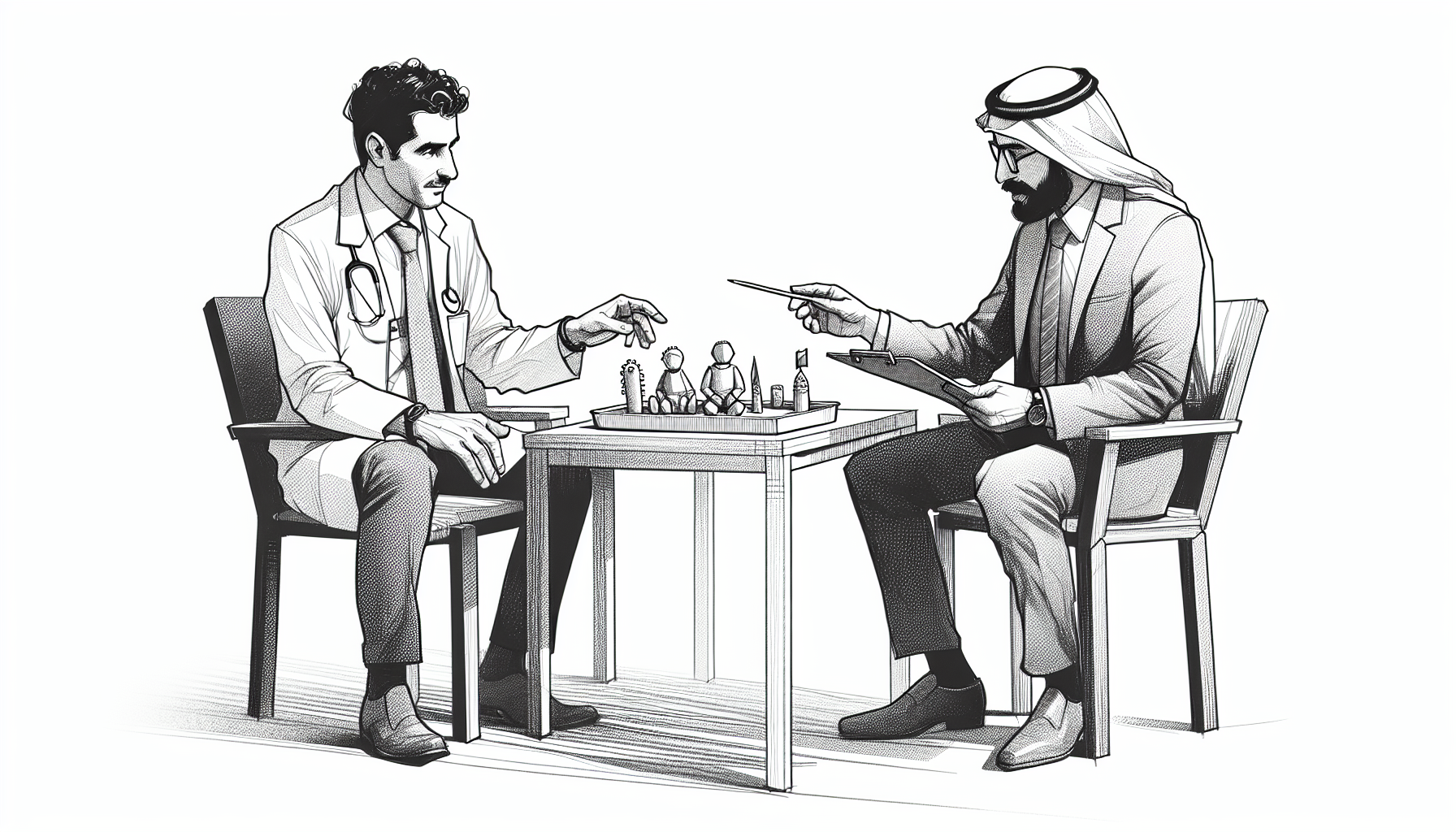

Training staff to deliver Naturalistic Environment Teaching (NET) well is harder than it sounds. While the steps are easy to describe, executing them during real play takes practice and precision. This study explores whether the teach-back method—a quicker alternative to traditional training—can help RBTs improve their NET fidelity. For clinical supervisors juggling limited training time and high standards, the findings offer a practical starting point.
What Is the Research Question Being Asked and Why Does It Matter?
This study asked a straightforward question: Can the teach-back method help RBTs implement Naturalistic Environment Teaching correctly—and can it do so faster than traditional staff training? (Behavior Analysis in Practice)
This matters because NET is easy to describe but hard to do well during real play. When staff miss steps, learners get fewer quality teaching opportunities, data becomes less useful, and sessions can start to feel like random “talking at” the learner instead of actual teaching. See also: PubMed Central.
Many clinics use Behavior Skills Training (BST) to teach NET, but BST takes time. That matters in real clinics, where training hours often aren’t billable and supervisors face competing demands. A faster method that still produces high fidelity could help clinics train more people and keep sessions consistent—as long as it protects learner dignity and keeps teaching natural.
The teach-back method differs from BST. Instead of extended modeling and practice cycles, it checks whether staff truly understand the steps by having them explain them back and answer questions. If teach-back works, it could be useful for quick training situations or when staff “kind of know” NET but keep missing key parts.
What Did the Researchers Do to Answer That Question?
The researchers worked with three RBTs at an autism clinic. All had some NET experience but no formal ABA coursework. They practiced in a play area using common toys, teaching a set expressive language target during play—naming items in a category like “things you see at the doctor.”
To protect real learners, the “learner” was a confederate (the lead researcher acting like a child). The confederate sometimes responded correctly, incorrectly, not at all, or showed pretend problem behavior like protesting and tossing toys. This let researchers see how staff handled common session moments without risking harm to actual clients.
Staff performance was scored using a 10-step NET checklist. The main outcome was procedural integrity—the percent of steps done correctly. Some steps were marked “not applicable” if the situation didn’t arise (for example, no problem behavior meant that step couldn’t be scored). Mastery criteria were strict: 100% correct for two sessions in a row.
The study used three phases:
- Baseline: Staff read written NET instructions, then ran a short session with no coaching.
- Teach-back: Staff re-read the instructions, then answered teach-back questions about NET. Errors were corrected immediately, and missed questions were reviewed until all were answered correctly.
- Post teach-back: Staff ran NET again without re-reading, to see what changed. If they didn’t reach mastery, they received brief feedback and modeling after sessions until they did.
How You Can Use This in Your Day-to-Day Clinical Practice
If you train staff on NET, teach-back works well as a fast “understanding check” before investing time in full BST. In this study, teach-back alone improved NET integrity from low to moderate levels—but it didn’t get anyone to perfect fidelity by itself. Don’t assume teach-back alone will produce mastery for complex skills like NET. Plan it as an early step that surfaces misunderstandings quickly, so later coaching can be shorter and more focused.
A practical approach: build a short teach-back script tied to your clinic’s NET checklist. The script should ask staff to explain key parts in plain words, not just repeat jargon. Have them describe how they’ll set up preferred items, how long they’ll wait before prompting, what “narrating play” sounds like, and what counts as a correct versus incorrect trial for data. The point is to make them say what they’ll do, out loud, before they do it with a learner.
After teach-back, don’t stop at “they answered correctly.” In this study, staff could answer questions accurately and still miss steps during real play. Your next move should be a short performance check—role-play or a brief in-session observation. Use the same NET checklist you care about in treatment and score it. This keeps the focus on what the learner actually experiences, not what staff can explain in an office.
When you see errors, give targeted feedback tied to learner dignity and teaching purpose. A common problem in this study was giving too many instructions unrelated to the target while playing. In real sessions, that turns NET into constant demands and kills the “natural” feel. If you see this, coach staff to keep play fun and shared, placing teaching cues in short, clear moments. Your feedback might sound like, “Say less, wait more, let the learner lead”—but only when that matches the learner’s goals and tolerance.
Modeling mattered here. Once feedback plus modeling started, all staff quickly reached mastery. A practical takeaway: keep modeling ready for the exact step that’s going wrong. If staff struggle with joining play, model joining play. If they struggle with waiting 3–5 seconds before prompting, model the wait. If they struggle with responding to problem behavior calmly, model a calm reset and a clean re-presentation of the instruction when appropriate. This is more efficient than re-teaching the whole NET package.
Teach-back works especially well when onboarding newer techs or when someone is “stuck” at the same fidelity level. This study included RBTs with one month to about 1.5 years of experience, and all improved. At the same time, don’t assume results will be the same for staff with very different backgrounds or those who already have strong NET skills. Remember, too, that this was done with a confederate, not real children—you still need to confirm skills hold up with actual learners, real motivation, real problem behavior, and real caregiver variables.
When measuring progress, be careful about what was actually tested. Not every NET step happened every session because some events didn’t occur. A staff member could look “better” simply because harder moments didn’t happen. In your clinic, observe across enough time and situations to see key moments: no response, incorrect response, transitions, and at least mild challenging behavior if it’s relevant to the case. If you can’t safely test some situations, document that and avoid claiming the person has “mastery” of that part.
Finally, treat teach-back as support for clinical judgment, not a replacement. A staff member can hit 100% on a checklist and still deliver NET in a way that feels pushy or ignores learner choice. Pair fidelity checks with simple dignity checks: Is the learner approaching? Having fun? Are there real choices? Is teaching paced to the learner, not to the adult’s anxiety about “getting trials”? Use teach-back and targeted modeling to make NET both correct and humane—and keep adjusting based on the learner in front of you.
Works Cited
Overstreet, D., Harvey, C., & May, M. E. (2025). Using the teach-back method to improve staff implementation of naturalistic environmental teaching. Journal of Organizational Behavior Management. https://doi.org/10.1080/01608061.2025.2594400