
Understanding echoics: identifying predictive indicators of vocal imitation.

For BCBAs, RBTs, and clinical teams working with young children with autism, this post helps translate intake VB-MAPP data into actionable priorities when echoic responding is weak or absent. It summarizes chart-review findings linking manding, spontaneous vocal behavior, and motor imitation with early echoic repertoires, and offers practical, ethical steps to prioritize communication-first targets. The focus is on using assessment data to make clear, humane decisions that reduce repeated failure and increase chances for vocal learning.
Comparing human video modeling to animated video modeling for learners with autism

For BCBAs, RBTs, and clinicians working with children with autism, this post compares human versus animated video modeling for teaching conversational vocal responses, facial expressions, and body language. It shows learners vary in which format supports faster, more accurate learning, so no single format is best for everyone. Use the study’s practical, data-driven guidance to run quick comparisons, set clear measurement criteria, and make individualized, ethical decisions about video-based instruction.
Functional analysis and treatment of repetitive verbal behavior in children diagnosed with autism spectrum disorder

For clinicians and school-based behavior analysts working with children with ASD, this post addresses repetitive verbal behavior that looks like a request but may actually be attention‑maintained. It describes brief functional analysis methods and a practical, dignity‑focused treatment package—teach a short attention FCR, answer the first query, then place repeats on scripted extinction with planned generalization and thinning. The goal is to turn ABA data into clear, ethical decisions that reduce repetitive speech without shutting down communication.
The use of partial textual stimuli within an interactive task for increasing reports of past behavior with a child with autism

For clinicians and behavior analysts who work with children with autism and difficulty reporting past events, this post summarizes a practical, low‑tech prompting routine. It describes using partial written cues within a short interactive turn‑taking task to increase accurate and varied reports, and shows how to record both accuracy and answer variety in your ABA data. Emphasis is on ethical implementation—fading prompts, reinforcing participation (not compliance), and using the collected data to guide clear, individualized clinical decisions.
Ableism in applied behavior analysis: historical context of services for autistic people

For behavior analysts, supervisors, and clinicians working with Autistic people, this review identifies how ableism can shape goals, targets, and service models. It provides concrete clinical checks—function-based thinking, social validity measures, assent practices, and documentation prompts—to reduce that risk. The focus is practical: use everyday ABA data to make clear, ethical decisions that prioritize learner safety, access, comfort, and choice.
Teaching autistic adolescents to identify fear and anger: a preliminary study

On this page What is the research question being asked and why does it matter? What did the researchers do to answer that question? How you can use this in your day-to-day clinical practice Works Cited Many emotion-recognition programs focus on matching facial expressions to feeling words—but faces don’t always tell the full story. A […]
Ableism in applied behavior analysis: A beginner’s guide to understanding and dismantling ableism in practice with autistic people

For behavior analysts (BCBAs, RBTs) working with autistic clients, this concise guide explains how ableism can shape goals, measurement, language, and intervention choices. It offers practical, ethics-focused checks—grounded in session data, social validity, and assent—to help distinguish harm from harmless difference and reduce unnecessary restriction. Use these steps to turn ABA data into clear, ethical clinical decisions that preserve client dignity and choice.
A preliminary investigation into teaching adolescents with autism to use apps to solve problems

For clinicians working with adolescents with autism, this post examines teaching everyday apps (Maps, Weather, Clock) as problem‑solving tools. It translates ABA data from a two‑student study into concrete decisions about chaining, prompt fading, discrimination training, response‑format adjustments, and generalization testing. The focus is practical and ethical: teach the necessary links, loosen response requirements early, and prioritize meaningful independence over perfect form.
Teaching nonarbitrary temporal relational responding in adolescents with autism
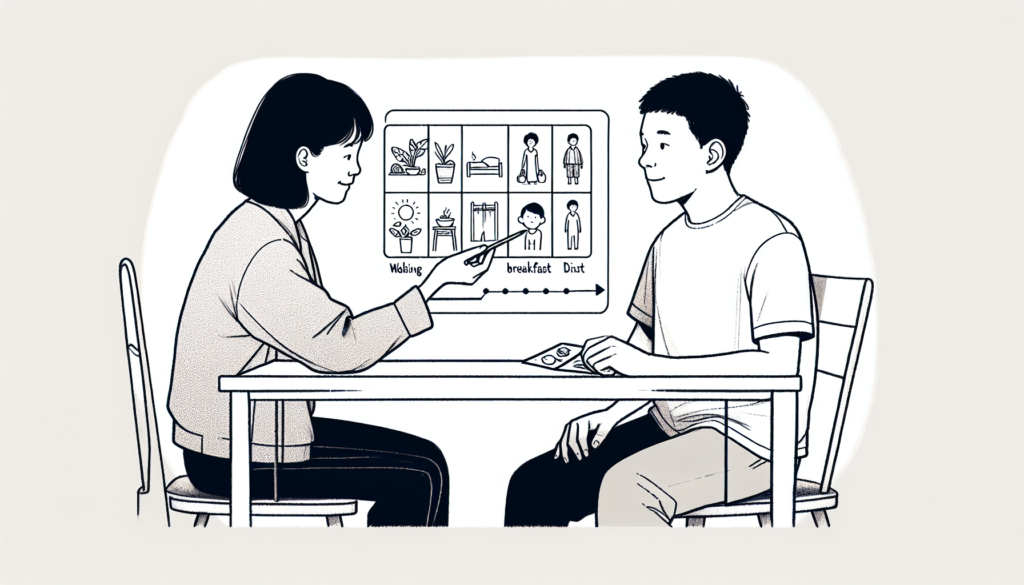
This post reviews a study on teaching nonarbitrary temporal relations—“before” and “after”—to autistic adolescents with early verbal skills, including a telehealth protocol and MET (multiple exemplar training). It translates the data into practical, ethical ABA steps: baseline checks, varied exemplars, precise error correction, and clear mastery, maintenance, and generalization criteria. For clinicians, BCBA/SLPs, and educators, it offers a data‑driven framework to decide when and how to teach sequencing skills that matter in daily life, while preserving learner dignity.