
Contingency discrimination training and resurgence: effects of reduced extinction session durations

On this page What is the research question being asked and why does it matter? What did the researchers do to answer that question? How you can use this in your day-to-day clinical practice Works Cited When we teach a new skill to replace problem behavior, that behavior can return if the new skill stops […]
What Most People Get Wrong About Behavior Reduction

Designed for practicing BCBAs, clinical supervisors, RBTs, and clinically informed caregivers, this post calls out the most common behavior reduction mistakes and the better alternatives. It helps you turn ABA data (ABC data, function hypotheses) into clear, ethical decisions—focusing on replacement skills, prevention, and dignity-first practice. Expect practical checklists and guidance on when to target reduction versus support, with assent and safety at the core.
H.3. Select socially valid alternative behavior to be established or increased when a target behavior is to be decreased.

Designed for practicing BCBAs, clinic leaders, RBT supervisors, and clinically informed caregivers, this post explains how to select socially valid, functionally equivalent replacement behaviors that actually work in daily life. It shows how to turn FBA data into clear, ethical decisions—matching function, securing social validity, and planning teachability, measurement, and generalization. You’ll get a practical framework, common pitfalls to avoid, and concrete steps you can implement this week to replace problematic behavior with a better, ethically sound alternative.
G.2. Design and evaluate differential reinforcement procedures with and without extinction.

This post is for clinicians, BCBA students, and practice teams using ABA with children and adults, and it helps turn functional assessment data into practical, ethical intervention decisions. It guides you through four differential reinforcement types (DRA, DRI, DRO, DRL), with and without extinction, anchored in the identified function and real-world constraints. You’ll learn to define observable targets, select reinforcers and schedules, set data-driven decision rules, and anticipate extinction-related side effects—always with consent and least-restrictive practices in mind. Practical guardrails, common pitfalls, and scenario-based guidance help ensure plans are feasible, fidelity-focused, and respectful of client dignity.
G.17. Design and evaluate positive and negative punishment procedures.

This post is for practicing BCBAs, RBT supervisors, clinic owners, and experienced caregivers, and it explains how to design and evaluate positive and negative punishment in ABA with ethical safeguards. It centers on turning ABA data into clear, ethical decisions—grounding use of punishment in functional assessment, consistent data collection with IOA, informed consent, and a plan to teach alternatives and fade the procedure. It offers practical guidelines on timing, intensity, and monitoring for side effects, and helps readers distinguish punishment from negative reinforcement and extinction to avoid common pitfalls.
Operant vs Respondent Extinction: ABA Examples & Differences

Operant extinction vs respondent extinction explained with concrete examples. Procedure, process, and side effects (extinction burst, recovery).
Positive vs Negative Punishment: ABA Examples & Differences

Positive vs negative punishment in ABA — clear examples, a 4-quadrant chart, and how to avoid common BCBA exam traps. Free CEUs included.
B.8. Identify and distinguish among unconditioned, conditioned, and generalized punishers.
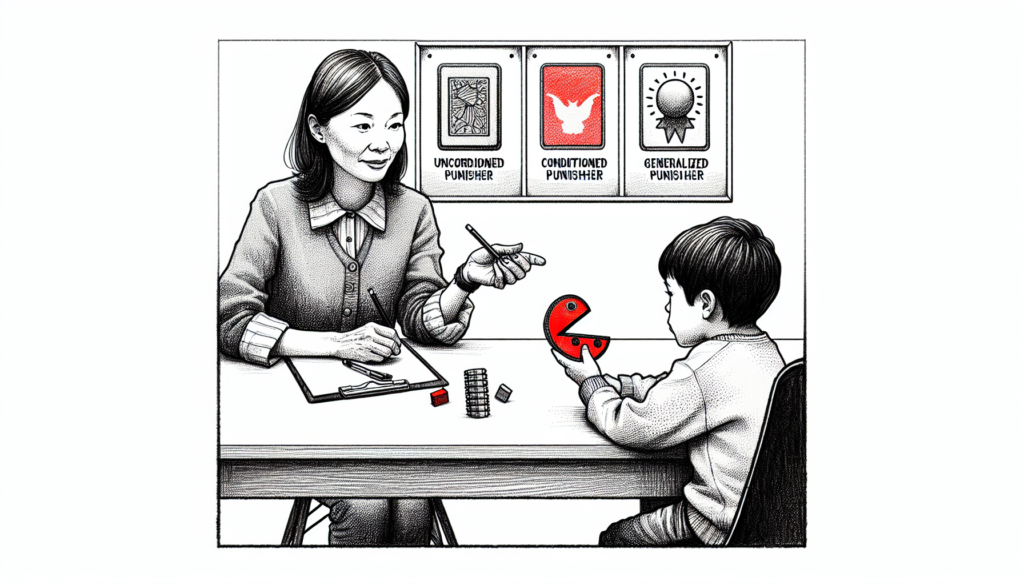
This post is for BCBAs, clinic directors, senior RBTs, and clinical caregivers who design behavior-reduction plans. It helps you distinguish unconditioned, conditioned, and generalized punishers using functional data, guiding safe and appropriate decision-making. With practical examples and ethical safeguards, it shows how to turn ABA data into clear, responsible choices that protect learning and relationships.
How to Know If Behavior Reduction Is Actually Working

This practical guide is for BCBAs, clinical supervisors, RBTs, and clinically informed caregivers who want to know when a behavior-reduction plan is actually working, not just when the graph goes down. It helps you turn ABA data into clear, ethical decisions by aligning reduction with safety, dignity, participation, and quality of life, using function-first analysis and replacement skills. You’ll find concrete steps for defining the target, selecting measures, checking treatment integrity, monitoring side effects, and applying decision rules to keep, change, fade, or stop a plan.
When to Rethink Your Approach to Behavior Reduction

Designed for ABA clinicians, educators, and families, this post translates behavior reduction best practices into clear, ethical decision-making. It guides you to rethink plans using a function-based approach, prevention-first strategies, replacement skills, and data-driven checks that prioritize safety and dignity. Practical checkpoints help you apply decisions across home, school, and clinic without hype.