
B.8. Identify and distinguish among unconditioned, conditioned, and generalized punishers.
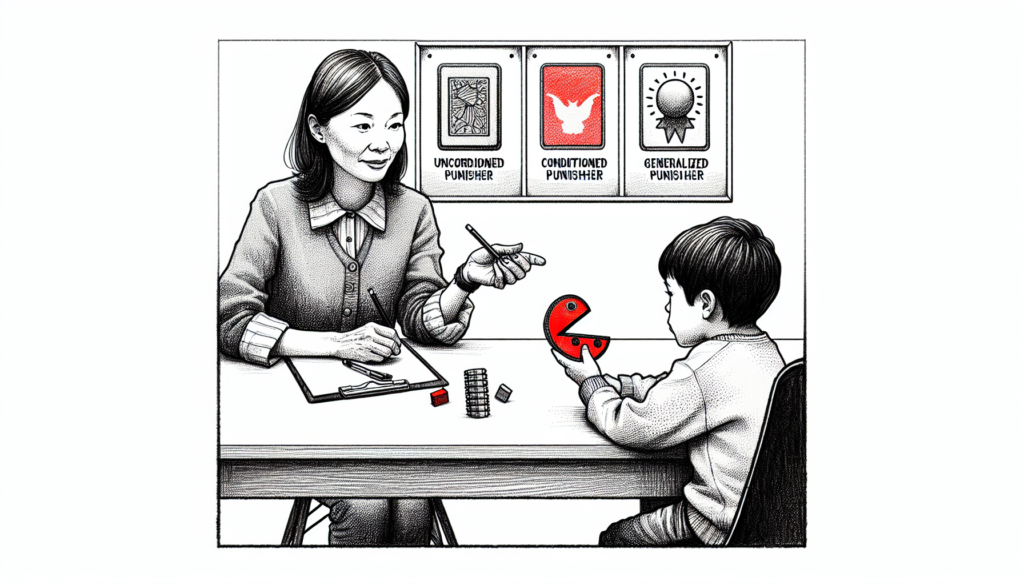
This post is for BCBAs, clinic directors, senior RBTs, and clinical caregivers who design behavior-reduction plans. It helps you distinguish unconditioned, conditioned, and generalized punishers using functional data, guiding safe and appropriate decision-making. With practical examples and ethical safeguards, it shows how to turn ABA data into clear, responsible choices that protect learning and relationships.
B.7. Identify and distinguish among unconditioned, conditioned, and generalized reinforcers.

This post is for BCBAs, supervisors, senior RBTs, and clinicians who want to accurately identify unconditioned, conditioned, and generalized reinforcers in practice. It translates reinforcer data into clear, ethical treatment decisions that affect speed, maintenance, and generalization. You’ll get a practical framework for classification, verifying conditioning through behavior, and building robust, scalable reinforcement plans.
B.9. Identify and distinguish among simple schedules of reinforcement.

Designed for practicing BCBAs, clinic owners, senior RBTs, supervisors, and clinically informed caregivers, this post helps you turn ABA data on reinforcement schedules into clear, ethical decisions. It breaks down the five simple schedules (CRF, FR, VR, FI, VI), what each schedule does to behavior, and how to thin reinforcement responsibly. A practical decision guide and data-driven checkpoints support choosing the right schedule for learning, maintenance, and real-world independence while upholding learner welfare.
B.19. Identify and distinguish among verbal operants.

Designed for BCBAs, clinic owners, senior RBTs, supervisors, and caregivers, this post helps you turn ABA data into clear, ethical decisions about verbal behavior. It explains how to identify the function of the five core operants—mand, tact, echoic, intraverbal, and textual—so assessment, goal setting, and intervention are driven by function, not form. By tracing antecedents and consequences, you’ll make practical, ethically sound choices that improve communication outcomes for learners.
B.16. Identify examples of motivating operations.

Designed for BCBA, RBT, and other ABA clinicians, this post clarifies what motivating operations (MOs) are and how to distinguish them from discriminative stimuli and reinforcers. It provides practical guidance to spot MOs in real cases and to use MO analysis for ethical, data-driven decisions in FBAs and BIPs. By tying MO findings to measurable outcomes, you can turn ABA data into clear, ethical decisions that minimize coercion and support client welfare.
B.17. Distinguish between motivating operations and stimulus control.

This post is written for BCBA professionals and clinicians working in ABA who need to distinguish motivating operations from stimulus control to improve assessment and planning. It translates data into clear, ethical decisions by showing how to determine whether behavior is driven by current reinforcer value (MO) or by learned cues (Sd/SΔ) and how to apply that insight in practice. You’ll find practical diagnostic questions, concise examples, and ethics-focused guidance to support least-restrictive, transparent interventions.
B.22. Identify ways behavioral momentum can be used to understand response persistence.

This post helps practicing BCBAs, clinic leaders, senior staff, and caregivers understand why some behaviors persist after reinforcement changes and others fade quickly. It shows how to translate reinforcement history and momentum data into practical, ethical decisions about planning transitions, fades, and generalization. It discusses when to use high-probability request sequences and differential reinforcement, and how to measure persistence to guide outcomes. Ethical guardrails, transparency with families, and a focus on client dignity and independence guide every recommendation.
How to Know If Behavior Reduction Is Actually Working

This practical guide is for BCBAs, clinical supervisors, RBTs, and clinically informed caregivers who want to know when a behavior-reduction plan is actually working, not just when the graph goes down. It helps you turn ABA data into clear, ethical decisions by aligning reduction with safety, dignity, participation, and quality of life, using function-first analysis and replacement skills. You’ll find concrete steps for defining the target, selecting measures, checking treatment integrity, monitoring side effects, and applying decision rules to keep, change, fade, or stop a plan.
When to Rethink Your Approach to Behavior Reduction

Designed for ABA clinicians, educators, and families, this post translates behavior reduction best practices into clear, ethical decision-making. It guides you to rethink plans using a function-based approach, prevention-first strategies, replacement skills, and data-driven checks that prioritize safety and dignity. Practical checkpoints help you apply decisions across home, school, and clinic without hype.
What Most People Get Wrong About Skill Acquisition

This ABA-focused guide identifies the most common skill acquisition mistakes and practical fixes. It’s for BCBAs, RBTs, and program supervisors who design and monitor ABA programs. It translates data into clear, ethical decisions across targets, prompting/fading, reinforcement, data rules, and generalization, with a practical audit checklist. It emphasizes assent, learner dignity, and staff training to prevent drift and support real-world skill use.